
Sterilisation is often necessary, but it needs discipline. For autoclaving, the guide sets out typical conditions of 15 to 20 minutes at 121°C at 1 bar, and it warns against exceeding 20 minutes because over-sterilising reduces mechanical resistance over time, particularly for plastics. It also notes that many polypropylene accessories can be autoclaved, but repeated cycles still cause gradual degradation.
What is the safest way to sterilise rotors without shortening their life?
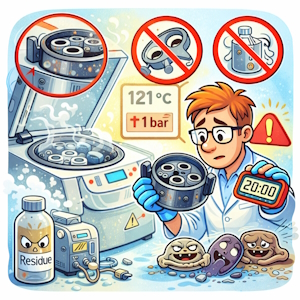
Preparation is where most people go wrong. The guide emphasises that components should be cleaned thoroughly before autoclaving, because residues can bake on and cause staining or surface changes. It also recommends rinsing with distilled water to avoid deposits that can leave marks and affect surfaces after drying.
For chemical disinfection, the guide includes a practical warning: parts should not be closed during disinfection because heat can build up in closed assemblies. For gas sterilisation it references ethylene oxide and the need to properly aerate items before use.
If you want the full sterilisation methods, compatibility notes, and aftercare steps, download the full guide.